

Skip to reading ↓

Lingerie · Chapter II of 9

Bras

Understand the construction, then explore the shapes it makes possible.

18 subjects · Read continuously, or jump to a subject.

Annotated conventional bra constructionSimplified garment-only drawing. Actual cup height, wire shape and support vary. Labels identify components, not body measurements.StrapCupWingBand / underbandCentre gore

Small changes in cup height, centre depth, strap placement, seams and materials can create a very different bra. This Chapter starts with the components before introducing the individual styles.

A style name is not a fitting verdict. The purpose here is to make construction recognizable, so that a reader can compare the actual garment rather than rely on a label.

Part of this Chapter

Understanding the Bra

Subject 1 · 8 min read

The Anatomy of a Bra

Before bra styles begin to make sense, it helps to understand the small pieces of engineering they share.

At first glance, a bra can seem like a fairly simple garment. Two cups. Two straps. A . Look more closely, and it becomes a remarkably coordinated piece of clothing.

The cups contain and shape. The band creates a stable foundation around the torso. The centre connects the cups. Straps stabilize the garment from above. Seams can change the way fabric supports the breast. Underwires, when present, establish a firmer boundary beneath and around it. [B01]

Even small components can have practical roles. A strip of changes tension. A side panel changes stability. A changes shape. Understanding those pieces makes almost every other conversation about bras easier.

Explore the Piece · Interactive study

Meet the parts of a bra.

Choose a component in the controls. Its location is highlighted in the illustration, and the explanation below describes how it participates in the whole garment.

A simplified conventional underwired bra is shown. Wireless, strapless, front-fastening and other designs rearrange or omit components. The drawing is not a personalized fitting assessment.

Explore a component
Bra anatomy: band highlighted.Original garment-only educational schematic. Shapes are illustrative, not measurements, fit predictions or product photographs.Closure detailBand
Illustrative garment study, not a product or a prediction of fit.

The starting study is shown below. Interactive controls need JavaScript; all explanations are also available in “Read every option”.

Starting selection shown.

Band: the stable base

The band runs around the torso and provides the foundation for a conventional bra. Stability is the goal, not maximum tightness. If the back keeps moving upward, assess the whole garment rather than shortening the straps repeatedly to compensate.

References: [B01] [B03]

Read every option, without using the controls

These are separate conditional explanations, not steps to combine into one routine.

Band: the stable base

The band runs around the torso and provides the foundation for a conventional bra. Stability is the goal, not maximum tightness. If the back keeps moving upward, assess the whole garment rather than shortening the straps repeatedly to compensate.

References: [B01] [B03]

Cup: three-dimensional construction

A cup contains and shapes through its depth, material and construction. It may use stitched panels, a moulded form, lining or foam. Two cups with the same size label can have different shapes; the label alone does not describe the pattern.

References: [B01]

Centre gore: the meeting point

The centre panel joins the cups in many conventional bras. A lower centre creates room for a plunge neckline. Contact with the sternum is a useful fitting observation for many wired designs, but should not be treated as a universal requirement for every construction or body.

References: [B01] [B03]

Wing: front to back

The wing travels around the side of the torso toward the closure. Width, stretch, lining and reinforcement change how it feels. The side wing is not the same as a side-support sling inside the cup, although both may contribute to a particular design.

References: [B01]

Underwire: a cup boundary

The curved wire is normally held inside a fabric channel. It helps frame the cup; it should not be asked to press on breast tissue to create support. Wire width, height and shape vary, so discomfort is a reason to reassess the garment rather than tighten it.

References: [B01] [B03]

Strap: position and stability

Straps connect the front and back and help stabilize the upper cups. Adjust them to the wearer rather than accepting the factory setting. Persistent slipping or digging can involve placement, cup or band fit, so tension alone is not the whole answer.

References: [B01] [B03]

Closure: an adjustable connection

Hook-and-eye columns allow different band positions. The number of hooks is not a support rating by itself. Front clasps, pull-on bands and other closures may offer different amounts of adjustment; inspect the actual mechanism rather than assuming they behave identically.

References: [B01] [B02]

Begin with the foundation

Construction study

balconette construction studySimplified garment-only drawing. Actual cup height, wire shape and support vary. Labels identify components, not body measurements.
A garment-only construction study. Actual cup, band and strap proportions vary between designs.

A conventional bra works as a system. No single part is responsible for everything. The band creates stability around the ribcage; cups contain the breasts; straps help position and stabilize the upper garment.

When one component is being asked to compensate for another, problems may become noticeable. Straps might be tightened excessively because the band is unstable. Cups might appear to fit while the wire rests on breast tissue. Learning the anatomy gives you a way to describe the problem rather than simply deciding that the whole category is uncomfortable. [B03]

The cup

The cups contain and shape the breasts. Their depth, materials, seams, lining and elasticity help determine how the garment behaves. Some are made from several sewn panels. Others are moulded into a smooth form. Some contain foam; others are lined without padding or are unlined. [B01]

Two bras with similar coverage can therefore behave differently. The cup is not merely an empty container. It is a three-dimensional shape.

The apex

The apex is the fullest or most forward-projecting area of the cup. It describes where the cup expects fullness to sit, not a compulsory position every body must meet.

One construction may create a rounder outline; another may allow more forward depth. This is one reason the same nominal size can feel different across designs.

Upper and lower cup

Many seamed bras divide the cup into panels. A lower section may contribute firmer shaping, while the upper section uses a more flexible fabric. Other designs divide the cup vertically or diagonally. A seam's effect depends on the entire pattern and material, not its direction alone.

The centre gore

Between the cups sits the centre gore, also called the bridge or centre panel. Its height and width vary. A plunge may have a very low centre; another style may connect the cups considerably higher.

In many conventional wired bras, a centre resting comfortably against the sternum is a useful fit observation. It is not a universal command for wireless bras or every body and design combination. Do not force a painful centre flat in pursuit of a rule. [B03]

Changing the centre changes both the relationship between the cups and the neckline the garment can sit beneath.

The underwire and its channel

An underwire is a curved structural component around the lower cup boundary. It normally sits inside a fabric casing called the wire channel. The wire helps maintain the intended cup framework; the channel holds it in position and separates it from the skin. [B01]

A well-matched wire should frame rather than rest on breast tissue. Wires vary in width, height and curvature. Someone who dislikes one wire shape may prefer a different one, or may simply prefer wireless bras. There is no requirement to wear a wire.

If a wire escapes its casing, stop wearing the damaged garment against the skin. Replacing or professionally assessing the piece is different from pushing the wire back and assuming the original structure has been restored.

The band

The band travels around the torso and creates the stable base from which the rest of a conventional bra works. It performs a substantial part of the stabilizing job, rather than leaving everything to the straps. [B01]

The aim is stability, not maximum tightness. The band should allow comfortable breathing and normal movement. If it feels unusually tight, cups and overall construction deserve attention too; the band cannot always be judged independently. [B03]

Underband, frame and cradle

Some bras have a continuous section beneath and around the cups, described as a frame or cradle. Underband often describes the lower supporting area or elastic, though usage varies.

A bandless bra still has a band around the torso. The word refers to the absence of the same continuous frame beneath the cups, not to a garment that has somehow lost its foundation. Read the shape rather than interpreting the name literally.

The wings

The wings extend around the sides toward the back and closure. They can be narrow or broad, flexible or reinforced, lined or unlined. Their depth and material change how the band feels against the body.

A wider wing may spread contact over more surface area. A narrower one may suit a lighter design. Neither is automatically the better choice.

Side support and side boning

A side-support panel may form part of the cup and guide its shape. Side boning is a separate reinforcement, often near a side seam. The two features can appear together or independently. A side panel does not necessarily mean there is boning inside it.

The back and closure

The back participates in the geometry of the garment. A leotard or U-shaped back curves toward the strap attachments. Racerback and crossed arrangements move those connections inward.

Many bras fasten with hooks and eyes. Columns of eyes adjust circumference; the vertical number of hooks generally follows the depth of the band. Those are two different counts. Some bras fasten in front, while others pull on without any clasp. [B01]

Do not assume a front clasp offers the same adjustment range as several rear hook-and-eye positions. Check the actual construction.

The straps

Straps stabilize the upper garment and help position it on the body. Their width, elasticity and placement matter alongside their length. Sliders adjust that length; rings may connect sections.

The factory setting is not a personalized fitting. Reconsider the adjustment when first wearing a bra and as the garment changes through use. Secure should not mean shortened so far that the shoulders carry the entire garment. [B03]

The neckline

The upper cup edge creates the bra's neckline. A balconette often opens broadly across the upper chest. A plunge descends toward the centre. A full-cup design rises farther over the breast.

This is where anatomy becomes style. You can begin to see what has changed instead of treating the names as arbitrary labels. [B02]

Elastic, seams and finishing details

Elastic permits controlled extension and recovery. Seams assemble relatively flat textile panels into a three-dimensional form. Rings, sliders, channels and closures connect or contain the parts.

Lace edging, embroidery and decorative stitching may sit beside those structural elements, or participate in them. Appearance and engineering are not always separate jobs.

A seam can join, shape and decorate at the same time. A beautiful ring may also be the point where a strap connects. Understanding these details need not make lingerie less romantic; it can make the craft more interesting.

Look at the whole bra

The cups connect to the centre and band. The wings carry the band around the body. Straps join front and back. Seams create form; elastic allows movement; a wire, when present, maintains part of the cup boundary.

None works completely alone. That is why changing one measurement or component can affect several other areas. The size label describes only part of the relationship. Construction describes the garment.

A bra is not simply two cups attached to straps. It is a small piece of wearable architecture.

Read the front and back as one garment

Use the anatomy explorer to follow one continuous route: closure, band, wing, cup, strap and back again. Highlighting one component does not mean the others stop working. A strap is connected to a cup and a back position; the cup meets the frame or band; the band closes around the torso. That connected route is a more useful mental picture than separate parts performing separate tricks.

Now compare two bras you already own, without changing either. Locate the same component in both and describe an observable difference. Perhaps one wing is deeper, one gore lower or one closure easier to reach. Avoid ranking the bras until you have named the difference. You may discover that they are doing different jobs rather than one being a better version of the other.

What a front photograph cannot establish

A photograph may show seaming and lace, but not the full stretch of a wing, the feel of an edge or a reinforcement hidden behind the cup. A back photograph can reveal closure positions and strap placement that the front conceals. The composition label and the maker's construction notes add another layer of information.

Ask a specific question when that information matters: “Does the cup have an internal side sling?” is more useful than “Is this supportive?” The latter depends on the wearer and purpose; the former asks about a feature the retailer can verify. Wacoal's anatomy guide documents such concealed slings as distinct components. [B01]

Use anatomy to describe, not diagnose

An anatomical term can make a fitting conversation clearer without becoming a medical explanation. “The outer end of this wire presses here” identifies a location. It does not establish why there is pain, whether a different bra will resolve it or whether a symptom is caused by clothing.

For ordinary garment comparison, point to the area and note when the problem occurs: on fastening, sitting or moving an arm. For persistent pain or a new breast change, stop treating the issue as a fitting puzzle and seek appropriate healthcare advice. The Fitting-Room Check separates garment observations from a definitive size verdict.

A practical vocabulary check

Cover the illustration labels and try describing the garment in three sentences. Name the cup construction, identify how the band closes, then describe one feature that changes its use beneath clothing. There is no score to achieve. When you can explain why one neckline opens differently or why one fastening is easier to use, the anatomy has become useful knowledge rather than a list to memorize.

Sources & editorial notes

Reference material, not affiliate recommendations. Manufacturer examples describe particular constructions rather than universal fit promises.

  1. [B01] Wacoal · Bra Anatomy↗ new tabNames and functions of conventional bra components; no universal support percentage or mandatory body position adopted.
  2. [B03] Bravissimo · Bra Fitting Guide↗ new tabBand, cup, wire and strap observations. This is garment guidance, not diagnosis.
  3. [B02] Wacoal · Bra Styles↗ new tabManufacturer terminology for bra families. Retail names are treated as overlapping descriptions.
Explore further · 2 related subjects

Subject 2 · 3 min read

Where Support Comes From

A bra distributes the job across several parts of the garment.

It is easy to look at a bra and assume the straps are doing most of the lifting. They pass over the shoulders, after all. But in a conventional bra, support is a partnership between the band, cups, fabric, seams, straps and, when present, . [B01]

Understanding that partnership explains why tightening one component rarely solves every fitting problem. A bra works best when no single piece is being asked to rescue all the others.

Start with the band

Construction study

balconette construction studySimplified garment-only drawing. Actual cup height, wire shape and support vary. Labels identify components, not body measurements.
A garment-only construction study. Actual cup, band and strap proportions vary between designs.

The band creates the foundation around the ribcage. It should remain reasonably level and stable as you move. When it rides upward at the back, shortening the straps may temporarily change the without correcting the unstable foundation. [B03]

A supportive band is not the tightest one you can tolerate. Stability should still allow comfortable breathing and normal movement.

The cups have work to do too

The cups contain breast tissue and establish shape. A that is too small can leave tissue outside its intended enclosure. A cup that is too large, too tall or a different shape from the wearer may gape or fail to feel secure.

That is why the band cannot always be judged in isolation. The whole garment needs to offer enough space in the right places. A size label alone cannot describe that relationship. [B03]

Seams can create direction

In a seamed bra, multiple panels help turn fabric into a three-dimensional cup. Their arrangement can influence depth, lift and containment. A side-support panel may guide the shape forward, while a flexible upper section can accommodate fullness differently from a rigid one.

It is tempting to assign one effect to every vertical or diagonal seam. In practice, pattern, material and the surrounding construction work together. Look at the whole cup rather than treating a single seam as a promise.

What the underwire contributes

An underwire establishes a firmer boundary around the lower and outer part of the cup. The wire should frame the breast rather than sit on breast tissue. It is one structural strategy, not the definition of support. [B01]

Wireless designs can use firm bands, reinforced cups, internal slings, seams and controlled-stretch fabrics. The question is not merely whether the bra contains wire, but how the rest of it has been engineered.

The straps stabilize

Strap length, width and placement all matter. Shortening them repeatedly should not be the only way the garment creates lift. If shoulder pressure is increasing while the band or cups remain unstable, revisit the rest of the fit rather than continuing to tighten. [B03]

Fabric and hidden structure

A firm mesh wing behaves differently from highly elastic lace. A cup may contain an internal sling that is hard to see in the photograph. Low-stretch straps and a reinforced lower cup create a different experience from uniformly soft fabric. [B01]

This is why a product's construction notes matter. Some of the most important work happens between layers.

Match support to purpose

Some wearers enjoy a firm, contained feeling. Others prefer more movement. An ordinary afternoon, lounging at home and running make different demands.

Support is better understood as a design goal matched to a wearer and an activity than as a universal ranking from soft to rigid. A garment can be excellent for one purpose and unnecessary for another.

Sources & editorial notes

Reference material, not affiliate recommendations. Manufacturer examples describe particular constructions rather than universal fit promises.

  1. [B01] Wacoal · Bra Anatomy↗ new tabNames and functions of conventional bra components; no universal support percentage or mandatory body position adopted.
  2. [B03] Bravissimo · Bra Fitting Guide↗ new tabBand, cup, wire and strap observations. This is garment guidance, not diagnosis.
Explore further · 1 related subjects

Subject 3 · 11 min read

Underwired and Wireless Bras

Wired and wireless are only the beginning. Learn where support comes from, how bra types overlap, and how to choose the structure that suits your body, clothes, and day.

If you have ever taken off a perfectly pretty bra at the end of the day and felt relieved to be out of it, you already know why construction matters. A bra can look lovely on a hanger and still feel completely wrong once you have lived in it for a few hours.

Most of us are not standing in front of a drawer thinking about engineering. We are thinking about the blouse we want to wear, whether the band will annoy us by lunchtime, whether the cups will sit smoothly, and whether we will still feel comfortable when the day becomes longer than expected.

That is the useful way to think about underwired and wireless bras. They are not two sides we need to choose between. They are two ways of building a bra. The better question is: where is this bra getting its structure, and does that structure suit me?

What an underwire is really doing

Construction study

wireless construction studySimplified garment-only drawing. Actual cup height, wire shape and support vary. Labels identify components, not body measurements.
A garment-only construction study. Actual cup, band and strap proportions vary between designs.

An underwire is the curved piece that sits inside a fabric channel beneath and around the lower part of each cup. Its job is to help define the cup, support its shape, and work with the band, straps, seams, and fabric to hold the breast in the position the bra was designed for. [B01]

When the fit is right, the wire should breast tissue rather than sit on top of it. The width of the wire matters, the height at the centre matters, and the shape of the cup built around it matters. A low can feel very different from a full-cup bra even when both have a wire and both carry the same size on the label.

This is why I would never tell a woman who disliked one wired bra that she simply does not suit underwire. Sometimes she does not. Sometimes the real problem is that the wire was too narrow, too tall, too rigid, or attached to a cup shape that did not suit her body.

A wire can be excellent at creating a defined cup boundary, separation, and a more projected shape. For many fuller-busted women, that structure can feel reassuring. For others, a rigid frame is exactly the sensation they do not want. Both preferences are perfectly reasonable.

What changes when the wire is removed

A wireless bra does not stop needing support just because the metal disappears. The work simply has to be shared differently.

A thoughtful wireless design may use a wider underband, deeper cups, bonded support panels, firmer zones of stretch, side wings, internal slings, moulded fabric, stronger elastic, or broader straps. A very soft lounge bra may use almost none of those things because its purpose is ease rather than firm support.

That difference matters. The phrase wireless bra can describe something feather-light and barely structured, or something quite substantial and supportive. You cannot tell which one you are looking at from the word wireless alone.

Wacoal includes wireless among many different bra styles, which is a helpful reminder that wire is only one part of the design story. [B02] A wireless bra can still be full coverage, plunge, minimizer, T-shirt, sports-oriented, moulded, unlined, or decorative.

Where the support actually comes from

When a bra is uncomfortable, it is tempting to blame the most obvious part. The straps are digging, so we tighten or loosen them. The band feels wrong, so we change the band size. The cups look odd, so we change the cup letter.

Sometimes that works. Often the problem is the relationship between several parts.

Part of the braWhat it contributesWhat I would notice
BandAnchors the bra around the torsoDoes it stay level without feeling painfully tight?
CupsContain and shape breast tissueIs there enough depth and room in the right places?
UnderwireCreates a firmer lower cup boundaryDoes it frame the breast rather than sit on it?
Seams or mouldingGive the cup its intended shapeDoes the cup shape agree with your own?
Side wingsStabilise the sides and connect cup to bandDo you prefer a lighter side or broader coverage?
StrapsHelp stabilise and refine positionAre they helping, or are they doing too much of the work?
Internal panelsReinforce or redirect supportCan you see where the bra is adding structure without a wire?

A wide strap can feel kinder on the shoulder, but it cannot rescue a badly fitting cup. A broad band can feel beautifully secure on one woman and far too much on another. A deep cup can be exactly what one breast shape needs and unnecessary on another.

The goal is not to collect features. It is to understand which features are solving your problem.

Bra names are useful, but they are not rules

One of the easiest ways to become frustrated with bra shopping is to assume every style name means exactly the same thing everywhere.

A T-shirt bra usually aims for a smooth appearance beneath fitted clothing. It may be wired or wireless. A full-coverage bra gives more coverage and containment, but greater coverage does not automatically mean greater support. A plunge bra lowers the centre so it can sit beneath a deeper neckline.

A balconette usually has a broader, more horizontal neckline and straps placed farther apart. A demi generally gives less upper-cup coverage. Those descriptions overlap from brand to brand, so I use them as directions rather than promises. [B02]

A bralette tends to be softer and less rigid, but it is not automatically a small-bust garment. Its usefulness depends on the band, cup construction, fabric recovery, and size range.

A minimizer changes the way the bust is held and distributed beneath clothing. It does not make breast tissue disappear, and I would be cautious of any fixed promise about losing a certain number of inches. A minimizer can be wired, wireless, moulded, or unlined.

A strapless bra has to rely more heavily on its band and internal construction because there are no straps helping to stabilise it. A convertible bra changes strap positions for different clothes. A front-close bra changes where the fastening sits. A longline bra extends farther down the torso and spreads structure over a larger area.

A sports bra is its own conversation because movement matters. Compression, encapsulation, or a combination of both may be used, and the bra should be judged while you move, not only while you stand in front of a mirror. Nike's sports-bra fitting guidance makes that point clearly. [B05]

A sleep or lounge bra is about preference and softness. Some women enjoy a little support at home or while resting. Others would rather wear nothing at all. There is no prize for choosing either one.

Cup shape is often the part no one explained to us

Many women know their band and cup size but have never been told that cup shape can matter just as much.

A cup can technically have enough volume and still be too shallow, too tall, too narrow, or too wide. That is why a woman can try two bras in the same labelled size and feel as though one was made for her while the other belongs to somebody else.

If breast tissue is being pushed upward or sideways, if the cup feels tight in front but gaps elsewhere, or if you keep changing band sizes without solving the problem, cup depth deserves a closer look.

A deeper cup gives more forward room. A shallower cup distributes that volume differently. A seamed cup can create shape through several fabric panels. A moulded cup asks the breast to sit inside a pre-formed shape.

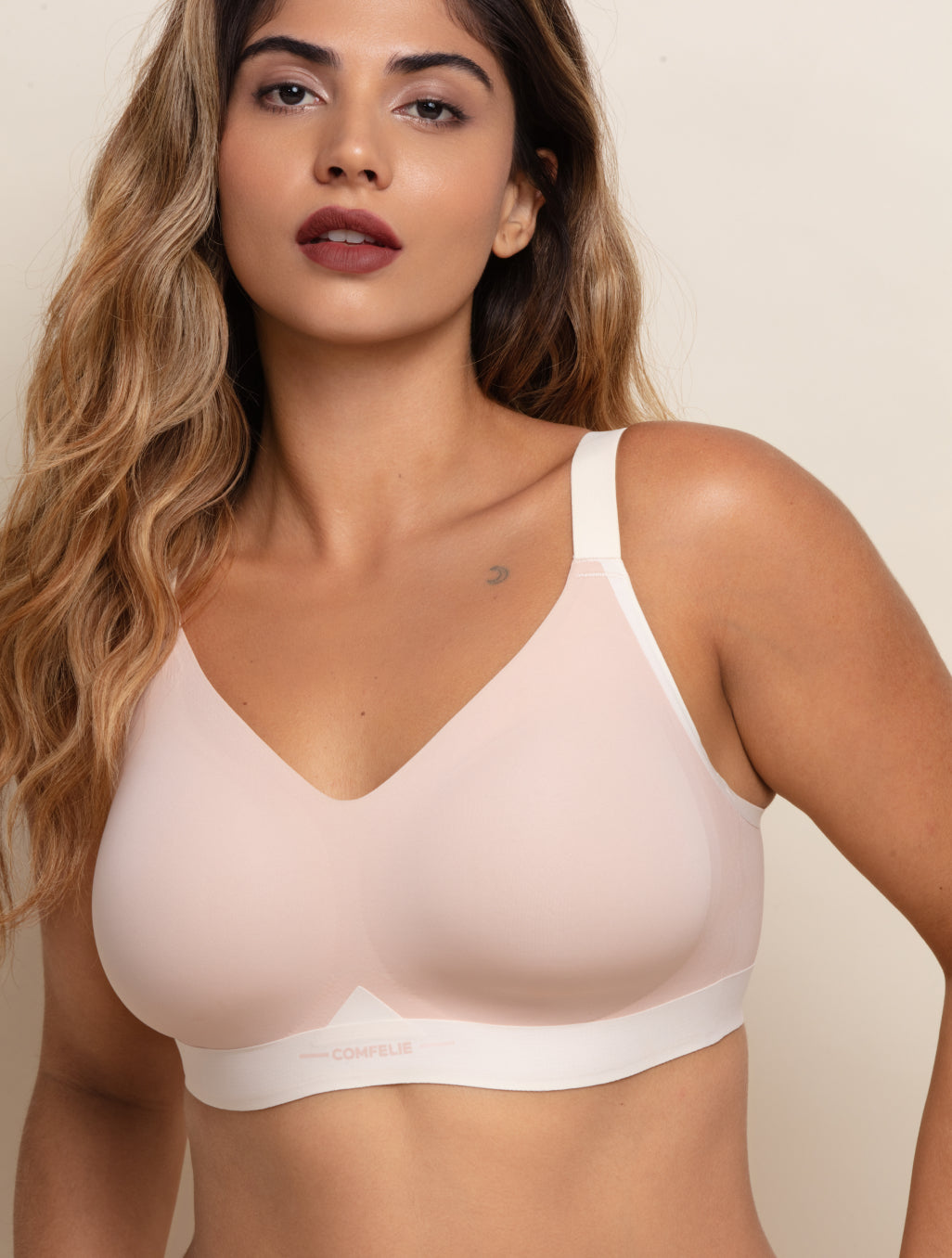
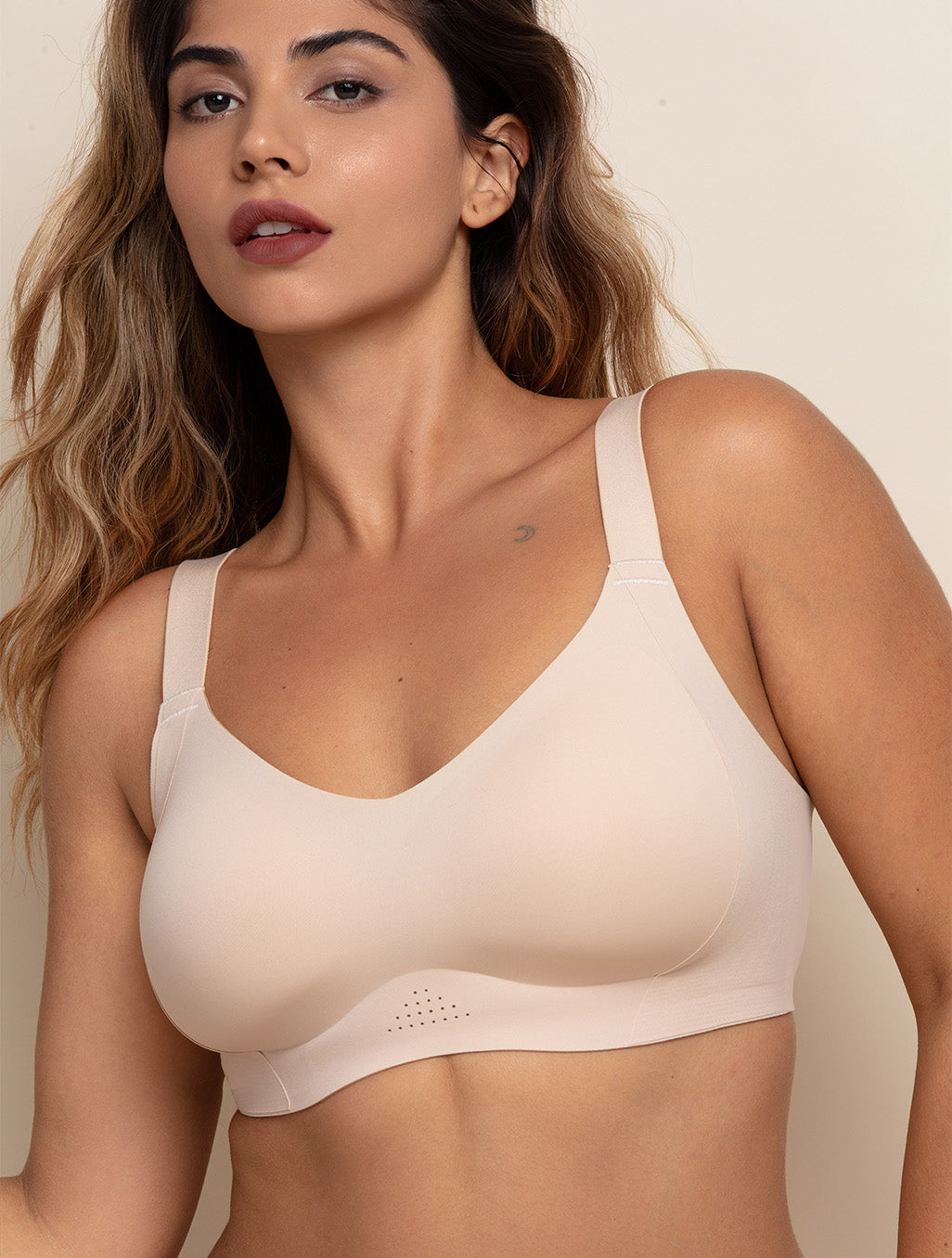
This is one reason we chose Comfelie's 3D Perforated Deep Cups bra as one of our wireless examples. It lets us point to something concrete. Sometimes the useful question is not “Is this more supportive?” It is “Does this cup make room where I actually need it?”

Comfort is information

A supportive bra should not require you to spend the day enduring it.

Bravissimo's fit guidance asks women to look at the band, cup, wire, and straps together, and that is exactly how I would approach it. [B03] If an underwire repeatedly sits on breast tissue, presses sharply at the centre, or digs under the arm, do not dismiss that as the price of support.

With a wireless bra, look at whether the band rolls or climbs, whether breast tissue slips beneath the cup, whether the centre feels stable enough for the design, and whether the supportive panels are helping or simply making the garment feel restrictive.

Then give the bra more than thirty seconds in front of a mirror. Sit down. Reach for something. Put your arms above your head. Walk around. Try the blouse or dress you actually intend to wear over it.

Straps that dig are not always asking for wider straps. They may be over-tightened because the band is not doing enough. A band that rides upward may be too loose, stretched out, or simply shaped poorly for your torso. Overflow can mean insufficient cup volume, but it can also mean the cup is too shallow. Gaping does not automatically mean the cup is too large. A tall or rigid cup can gap even when another cup of the same volume fits beautifully.

This is the part of bra fitting I wish more women were taught early: discomfort is not a personal failure. It is useful information about the garment and the match between that garment and your body.

A fuller bust does not have to mean underwire

A good underwired bra can be a wonderful choice for a fuller bust. It can give a clear cup frame, separation, and the projected shape many women prefer.

But fuller support can also be created without a wire. Wireless designs aimed at fuller busts often make their work more visible through deeper cups, broad underbands, stronger side panels, wider straps, internal bonded zones, and controlled stretch.

The important thing is to be honest about what you want the bra to feel and look like.

If you love the lifted, projected shape of a structured wired cup, a soft wireless bra may never feel like an equal substitute, and it does not need to. If you value flexibility and fewer rigid contact points, a wireless design may feel much more natural even if the silhouette is softer.

There is no more sophisticated choice here. There is only the choice that suits your body and the day you are dressing for.

Three Comfelie bras, three different reasons for choosing them

When we decided to show real examples in The Rose Books, I did not want three bras that were essentially the same thing in different colours. If Rose is going to place a product beside our guidance, it should help explain something.

Airlite is our lightweight example. The bonded construction, moisture-wicking fabric, and lower-bulk design make it the one I would look at when the priority is ease and a smoother, lighter everyday feel.

The 3D Perforated Deep Cups style is our depth example. It belongs here because it makes a common fitting issue easier to see. If you regularly feel as though your breast is being asked to sit in a cup that is too flat, this is the kind of construction worth comparing.

The Invisible Powerband is our fuller-support example. Its wider underband, deeper cups, side structure, and broader straps show how a wireless bra can distribute support across the garment rather than relying on one rigid frame.

We selected these three because each one has a clear reason to exist. Their dedicated Rose Selection pages explain what stood out to us, what the construction is designed to do, and when I would suggest looking at a different bra instead.

That last part matters. A recommendation feels more trustworthy when it also tells you who may be happier with something else.

So, wired or wireless?

Start with the life the bra has to fit into.

If you enjoy a defined cup boundary, clear separation, and the shape a structured wired cup can create, start with underwire. Pay attention to wire width, centre height, cup depth, and how the bra feels after you have moved in it.

If you dislike rigid contact points, prefer flexibility, or simply feel better in softer modern constructions, start with wireless. Then look beyond the word wireless and ask where the support is coming from.

If the neckline of your dress is low, compare plunge bras. If you want a smoother look beneath a fine knit, compare T-shirt and seamless constructions. If you dislike cup bulk, look at unlined options. If you need support while moving, look at sports-specific designs. If the bra is mainly for home, there is nothing wrong with choosing softness over structure.

And if one bra cannot do all of those jobs, that is not a failure of your wardrobe. Most of us do not expect one pair of shoes to work for the office, a wedding, a long walk, and an evening at home. A bra deserves the same common sense.

The question I would take into the fitting room

Before buying your next bra, finish this sentence:

“I want this bra to be better at…”

Maybe you want it to disappear beneath a fitted top. Maybe you need more cup depth. Maybe you want less pressure from rigid components, more side coverage, a lower centre for a favourite dress, or a band that feels steady without feeling heavy.

Once you can name the need, the labels become far more useful. You can compare the details that matter and ignore the ones that do not.

That is what I want The Rose Books to do for you. Not turn getting dressed into an examination, and not tell you that you need another thing to buy. I want you to understand the garment well enough that the next choice feels calmer, more personal, and much more your own.

Rose Selections · Comfelie

Three wireless bras, three different jobs.

Rose compared Comfelie’s current wireless range and chose a deliberately small group that teaches the differences rather than repeating the same idea. Each dedicated page explains what makes the construction useful, how it is designed to feel, and when another bra may be the better choice.

Comfelie Airlite wireless bra shown as a Rose Selection for lightweight everyday wear

Rose Selection · Lightweight wireless

Airlite Only 89g Wireless Comfortable Bra

The one I would look at first for a lighter everyday feel

For the woman who wants her everyday bra to feel present as little as possible, Airlite is the Comfelie style that stood out to us for its lighter construction, smooth finish, and clear comfort-first purpose.

Why Rose chose this piece →
Comfelie 3D Perforated Deep Cups wireless bra shown as a Rose Selection for deeper cup construction

Rose Selection · Deeper-cup wireless

3D Perforated Deep Cups Comfortable Bra

The one I would compare when cups often feel too shallow

If you often find that the band seems reasonable but the cup still feels flat or restrictive, this is the Comfelie bra I would use to show why cup depth can matter as much as the size printed on the label.

Why Rose chose this piece →
Comfelie Invisible Powerband wireless supportive bra shown as a Rose Selection for fuller support

Rose Selection · Fuller wireless support

Invisible Powerband Wireless Supportive Bra

The one I would compare for a more anchored wireless feel

For the woman who wants wireless comfort but still likes to feel securely held, Powerband is the strongest example in this group of how support can be spread through the band, straps, cups, and side structure.

Why Rose chose this piece →

These are editorial selections, not claims that one bra will fit every body. Some Rose Selections may also appear in the catalogue; future selections do not have to.

Sources & editorial notes

Reference material, not affiliate recommendations. Manufacturer examples describe particular constructions rather than universal fit promises.

  1. [B01] Wacoal · Bra Anatomy↗ new tabNames and functions of conventional bra components; no universal support percentage or mandatory body position adopted.
  2. [B02] Wacoal · Bra Styles↗ new tabManufacturer terminology for bra families. Retail names are treated as overlapping descriptions.
  3. [B03] Bravissimo · Bra Fitting Guide↗ new tabBand, cup, wire and strap observations. This is garment guidance, not diagnosis.
  4. [B05] Nike · Women’s Sports Bras: Fit Guide↗ new tabManufacturer support categories and movement checks, not independent laboratory certification.
Explore further · 1 related subjects

Subject 4 · 5 min read

Seamed, Moulded, Lined, and Unlined Cups

Four terms that become clearer when they are read as separate characteristics.

A bra can be seamed and lined. and unpadded. Unlined and underwired. Seamless and full coverage.

These words describe different questions: how the cup is formed, whether extra layers are present, and how the finished surface behaves. They are not four mutually exclusive bra styles. [B01]

Explore the Piece · Interactive study

Change a feature, not the whole definition.

Explore cup formation, lining, wire presence and band depth independently. These controls teach different construction terms; they do not configure a product for purchase.

Illustrative combinations are not a manufacturing specification or a prediction of lift, comfort or fit. Not every combination is stocked by a retailer. Moulded does not necessarily mean padded; unlined does not necessarily mean unsupportive.

Cup formation
Lining and padding
Wire presence
Band depth
Construction study: seamed, unlined, wired, standard band.Original garment-only educational schematic. Shapes are illustrative, not measurements, fit predictions or product photographs.Closure detail
Illustrative garment study, not a product or a prediction of fit.

The starting study is shown below. Interactive controls need JavaScript; all explanations are also available in “Read every option”.

Starting selection shown.

Seamed formation

Several shaped panels are stitched together to create a cup. The seams are part of its three-dimensional construction, not merely decorative lines. Their particular arrangement matters more than a universal promise that one seam direction produces the same result on every wearer.

References: [B01]

Unlined

The outer cup is not backed by the extra lining or padding illustrated in the other choices. The garment may still contain seams, wire, slings and reinforced materials. Sheerness, lining and support are related design decisions, not interchangeable terms.

References: [B01]

Underwired framework

A wire is added along the cup boundary in this schematic. That identifies a construction element, not the level of comfort. The cup and wire still need to accommodate the wearer; their shape cannot be judged from band and cup letters alone.

References: [B01] [B03]

Conventional band depth

This illustration uses a relatively shallow band. “Standard” is a comparison label rather than a specified width. A band’s stability also depends on material, fit and construction, not only how much torso area it covers.

References: [B01]

Read every option, without using the controls

These are separate conditional explanations, not steps to combine into one routine.

Seamed formation

Several shaped panels are stitched together to create a cup. The seams are part of its three-dimensional construction, not merely decorative lines. Their particular arrangement matters more than a universal promise that one seam direction produces the same result on every wearer.

References: [B01]

Moulded formation

A cup is formed into a predetermined shape rather than relying only on joined panels. It can be fabric or include foam. A smoother outer surface does not guarantee a shape match; empty space at an edge can still make a smooth cup visible under clothing.

References: [B02]

Unlined

The outer cup is not backed by the extra lining or padding illustrated in the other choices. The garment may still contain seams, wire, slings and reinforced materials. Sheerness, lining and support are related design decisions, not interchangeable terms.

References: [B01]

Fabric-lined

A backing layer can change opacity, support or feel against skin without adding a thick foam pad. A lace outer surface and a fine lining can work together. Always read the actual fibre and construction description rather than translating lined into push-up.

References: [B01]

Padded

Additional foam or other padding occupies part of the cup. Its thickness and position determine its purpose. Uniform light padding for opacity is different from graduated padding intended to reposition tissue. This cross-section is conceptual, not a promise of a particular size increase.

References: [B02]

Underwired framework

A wire is added along the cup boundary in this schematic. That identifies a construction element, not the level of comfort. The cup and wire still need to accommodate the wearer; their shape cannot be judged from band and cup letters alone.

References: [B01] [B03]

Wireless framework

Removing the wire does not remove all structure. Bands, seams, internal support panels and controlled-stretch fabrics may still do substantial work. A soft decorative bralette and a strongly engineered wireless bra can feel very different.

References: [B02]

Conventional band depth

This illustration uses a relatively shallow band. “Standard” is a comparison label rather than a specified width. A band’s stability also depends on material, fit and construction, not only how much torso area it covers.

References: [B01]

Longline band

The band extends farther down the torso. It creates more design space, but the extra length needs to cooperate with sitting, bending and the distance between underbust and waist. A longline bra does not become a true corset just because it includes a deeper panel.

References: [B02]

Seamed cups

Construction study

balconette construction studySimplified garment-only drawing. Actual cup height, wire shape and support vary. Labels identify components, not body measurements.
A garment-only construction study. Actual cup, band and strap proportions vary between designs.

A seamed cup is assembled from two or more panels. Their shapes and seams create three-dimensional form. Materials may be light or firm, stretchy or relatively rigid.

Seamed cups can be lined or unlined, wired or wireless. may emphasize the construction, or plain fabric may keep it understated. The defining feature is the assembled panels, not a particular level of coverage.

Moulded cups

A moulded cup is formed into a shape rather than relying exclusively on panel seams to create that form. Many smooth everyday bras use moulded cups.

Moulded does not automatically mean heavily padded. A cup may be thin, made with foam, or formed from a different material. Look for the separately stated and padding details rather than treating the word moulded as a complete specification. [B01]

Lined and padded are not synonyms

Lining is an additional layer used for purposes such as opacity, comfort or reinforcement. It can be very thin. Padding adds material that may create contour or reposition volume.

A lace outer cup backed with fine mesh can be lined without resembling a push-up bra. Equally, a thin foam contour cup need not produce the same shaping effect as graduated push-up padding.

Unlined cups

In retail use, unlined usually indicates the absence of foam or a built-up lining associated with padded designs. Exact terminology varies. An unlined cup can still contain seams, reinforcement or an internal support component, so inspect the actual description.

Unlined does not mean unsupported. It also does not guarantee transparency. Opacity depends on the fabric itself.

TermWhat it describesWhat it does not settle
SeamedPanels joined to create the cupPadding, coverage or wire
MouldedA cup formed into a shapeHow thick or padded it is
LinedAn additional layerWhether it creates push-up
UnlinedA lighter layer construction in the maker's terminologySupport level or guaranteed sheerness

Read one bra in layers

An embroidered three-part lace bra could be seamed, unlined, underwired and full coverage. Each term adds information rather than cancelling the others.

Beneath clothing

A smooth cup can reduce visible texture beneath a fine top. Seamed cups may be less noticeable under thicker or textured clothing. Fit, colour contrast and the outer garment still matter.

Choose the surface for the clothes and the construction for the wearer. Neither job needs to be done by one universal bra.

Separate formation, layers and reinforcement

The construction explorer keeps four questions independent. How was the cup formed? What layers are inside it? Is there a wire? How far does the band extend? Moving one control changes the feature being discussed, not every aspect of a real bra at once.

The illustration is deliberately conceptual. Selecting a combination does not promise that a manufacturer makes it, that its fabric would behave exactly as drawn or that it would provide a particular support level. It makes the vocabulary visible so a real product description is easier to interpret.

Read two example descriptions

Consider “seamed, fabric-lined, underwired balconette.” This describes formation, an extra fabric layer, the presence of a wire and a style family. It does not yet tell you the exact fibre, how firm the band feels or whether the cup shape matches you.

Now consider “moulded, lightly padded, wireless T-shirt bra.” The moulding and padding describe construction; wireless removes one structural component; T-shirt describes the intended smooth appearance beneath clothes. Neither description is a complete recommendation. Both need the actual garment's sizing and care information.

Wacoal's anatomy guide uses several separate cup labels, including foam, spacer, moulded and cut-and-sew constructions. Its wording also demonstrates why a retailer's own definition should be read in context instead of assuming every label is used universally. [B01]

Compare the inside as well as the outside

When it is possible to handle the garment, turn the cup gently enough to inspect its lining without creasing a formed shape. Look for an extra fabric layer, a pocket for a removable insert or a panel that reinforces only part of the cup. None should be assumed from opacity alone.

Make a note of what is confirmed and what remains unknown. “The description says unlined; the photograph shows a three-part cup” is more reliable than concluding from a photograph that there is no internal reinforcement. Uncertainty is useful information when it tells you what to ask next.

Choose the comparison that answers your question

If your question is about texture showing through a top, compare the outside of the cups beneath that top. If it is about bulk, compare the layers. If it is about a cup edge standing away, read Cup Fit and Shape rather than assuming all moulded cups need a smaller size.

For care, move to Structured and Moulded-Cup Bras. A name such as T-shirt or balconette does not supply a washing method. The construction and garment label need to travel with the piece into its care routine.

Sources & editorial notes

Reference material, not affiliate recommendations. Manufacturer examples describe particular constructions rather than universal fit promises.

  1. [B01] Wacoal · Bra Anatomy↗ new tabNames and functions of conventional bra components; no universal support percentage or mandatory body position adopted.
  2. [B02] Wacoal · Bra Styles↗ new tabManufacturer terminology for bra families. Retail names are treated as overlapping descriptions.
  3. [B03] Bravissimo · Bra Fitting Guide↗ new tabBand, cup, wire and strap observations. This is garment guidance, not diagnosis.
Explore further · 2 related subjects

Part of this Chapter

Bra Styles

Subject 5 · 5 min read

Balconette Bras

An open neckline, wider-set straps and space above the cup.

The is one of lingerie's most recognizable silhouettes. Its upper cup is relatively open, its straps are often set farther outward, and the neckline tends to run more horizontally than a plunge.

Retailers do not define it identically. Some balconettes overlap heavily with or half-cup styles. The construction is more useful than insisting on a single name. [B02]

Construction study

The same parts, rearranged.

balconette construction studySimplified garment-only drawing. Actual cup height, wire shape and support vary. Labels identify components, not body measurements.

Balconette

Broad upper opening

plunge construction studySimplified garment-only drawing. Actual cup height, wire shape and support vary. Labels identify components, not body measurements.

Plunge

Lower centre

full-cup construction studySimplified garment-only drawing. Actual cup height, wire shape and support vary. Labels identify components, not body measurements.

Full Cup

Greater upper coverage

Simplified construction studies, not product photographs or fixed category boundaries. Cup height, centre and strap placement should be checked on the actual garment.

What creates the shape?

Construction study

balconette construction studySimplified garment-only drawing. Actual cup height, wire shape and support vary. Labels identify components, not body measurements.
A garment-only construction study. Actual cup, band and strap proportions vary between designs.

Many balconettes use underwire and seamed cups, though that is not a universal requirement. Lower panels can contribute to a lifted outline while the upper edge leaves more of the chest open.

Lining, and material change the result. An embroidered unlined version and a smoother moulded version can share the broad silhouette while behaving differently on the wearer.

The neckline is the clue

Look first at the upper cup edge. Does it create a relatively broad, open line? Then look at the straps. Do they attach farther toward the outside of the cup?

Those observations usually tell you more than a category tag. Also inspect centre height, cup depth and side coverage rather than assuming every balconette has the same proportions.

Balconette, demi or plunge?

Style descriptionMain ideaWhat to inspect
BalconetteA broadly open upper necklineCup edge and often wider strap placement
DemiReduced upper-cup coverageHow low the cup finishes
PlungeOpenness down the centreLow gore and inward-descending neckline

Demi and balconette can overlap. Plunge describes a clearer difference at the centre. A bra may reasonably carry more than one of these descriptions.

Strap placement and fit

Wider-set straps can complement a broad neckline. Some wearers with narrower or sloping shoulders find that placement less cooperative; others enjoy it. Strap position is a relationship with the wearer, not a flaw in either.

Persistent gaping, cutting in, sliding straps or wire pressure deserve a closer look at size and shape. The answer is not automatically a tighter strap or smaller cup. [B03]

What it can work beneath

Square, wide scoop and some sweetheart necklines can leave space for a balconette's shape. A very deep V may need a lower centre. An off-shoulder garment may still expose the straps.

Use the actual outfit as a check. Neckline depth and width vary too, so a style name cannot guarantee that the bra remains hidden.

Care and comparison

Follow the garment label, protect lace from snagging and avoid crushing moulded cups. Care depends on materials and structure rather than the balconette label alone.

When comparing pieces, decide whether you want an unlined or smoother cup, how much centre height the clothing permits, and whether the strap placement is comfortable. Those distinctions lead to a clearer choice than simply looking for the most decorative example.

Compare balconettes within the family

Once the silhouette is familiar, the more useful question is which balconette construction you are considering. Compare a soft seamed example with a formed, lined example. They can share a relatively open neckline while presenting different surfaces beneath clothing and responding differently to the wearer's shape.

Then compare upper edges. Is the edge relatively firm, elasticated or finished with stretch lace? Look at centre height and strap position as well. These details explain why liking one balconette does not guarantee that every other balconette will feel similar. A style name opens the search; it does not finish the fitting.

A three-part neckline trial

Take the actual top or dress into the comparison. First look straight ahead: do the cup edges stay behind the neckline? Next look from the side, where a wide strap or upper cup may become visible. Finally sit and reach comfortably. The garment needs to work when you are not holding a photographic pose.

Decide whether a visible strap is acceptable before rejecting the combination. Sometimes the intention is a concealed foundation; sometimes a deliberate glimpse is part of the outfit. Those are different styling briefs. Read Square, Scoop and Wide Necklines for the outfit-led comparison.

When the upper edge is not cooperating

A gap is an observation, not an automatic instruction to buy a smaller cup. Note whether the gap remains when standing naturally or appears only as you lean forward. Likewise, distinguish an edge pressing across the breast from ordinary contact that is comfortable. The useful next step may be another size, another upper-cup construction or a different style.

Check the whole bra rather than fixing one edge at the expense of the band or wire. Bravissimo's fitting guidance considers multiple areas together; it does not make a single product photograph a substitute for trying the garment. [B03]

Decide what would improve the piece

Write a short comparison brief: “Keep the broad neckline, try a less prominent cup surface,” or “Keep this fabric, look for a strap position that needs less adjustment.” That preserves what works and gives the next comparison a purpose.

There is no need to move away from balconettes merely because one has not worked. Equally, there is no reason to insist on the label if a demi or another style gives you the desired result more comfortably. Demi Bras and Plunge Bras are neighbouring references, not competing rules about what you should wear.

Sources & editorial notes

Reference material, not affiliate recommendations. Manufacturer examples describe particular constructions rather than universal fit promises.

  1. [B02] Wacoal · Bra Styles↗ new tabManufacturer terminology for bra families. Retail names are treated as overlapping descriptions.
  2. [B03] Bravissimo · Bra Fitting Guide↗ new tabBand, cup, wire and strap observations. This is garment guidance, not diagnosis.
Explore further · 2 related subjects

Subject 6 · 2 min read

Demi Bras

Reduced upper-cup coverage without one compulsory construction.

A demi bra usually covers less of the upper breast than a full-cup style. Exactly how much is not standardized, and a retailer's demi can resemble another retailer's balconette.

The useful idea is coverage. Demi does not automatically mean padded, push-up, moulded or underwired. [B02]

Construction study

The same parts, rearranged.

balconette construction studySimplified garment-only drawing. Actual cup height, wire shape and support vary. Labels identify components, not body measurements.

Balconette

Broad upper opening

plunge construction studySimplified garment-only drawing. Actual cup height, wire shape and support vary. Labels identify components, not body measurements.

Plunge

Lower centre

full-cup construction studySimplified garment-only drawing. Actual cup height, wire shape and support vary. Labels identify components, not body measurements.

Full Cup

Greater upper coverage

Simplified construction studies, not product photographs or fixed category boundaries. Cup height, centre and strap placement should be checked on the actual garment.

What makes a demi?

Construction study

balconette construction studySimplified garment-only drawing. Actual cup height, wire shape and support vary. Labels identify components, not body measurements.
A garment-only construction study. Actual cup, band and strap proportions vary between designs.

The upper cup finishes lower, opening more of the upper chest. placement and centre height vary. Cups may be formed or seamed, lined or unlined.

Those choices can create different silhouettes beneath the same broad description. A smooth demi may serve as an everyday foundation; a version may make the surface detail part of the appeal.

Demi versus balconette

Balconette more often emphasizes a broad, relatively horizontal opening with outward-set straps. Demi emphasizes reduced coverage. The two frequently overlap rather than forming a clean pair of opposites.

When comparing them, identify the actual cup edge, gore and strap attachment. A similar name does not promise a similar fit.

Demi versus full-cup

Here the distinction is easier to see. A full-cup bra encloses more of the breast; a demi leaves more of the upper area open. That may make the demi easier to conceal under a lower neckline.

A lower edge interacts with breast fullness differently. Cutting in or empty space at that edge can indicate a mismatch of shape or size, not a reason to conclude that the wearer is wrong for lingerie. [B03]

Styling and construction

A demi can be useful when a rises too high but a dramatically low plunge is unnecessary. Consider the texture beneath clothing as well as the coverage. Lace or embroidery can remain visible through a fine fabric even when the cup edge is concealed.

Make a specific comparison

Notice what you like about a current bra, then change one characteristic at a time: upper coverage, cup material, strap position or centre height. That preserves useful information instead of treating every new purchase as a completely new experiment.

Care remains garment-specific. A delicate unlined demi and a foam-cup version need not be washed or stored in exactly the same way.

Sources & editorial notes

Reference material, not affiliate recommendations. Manufacturer examples describe particular constructions rather than universal fit promises.

  1. [B02] Wacoal · Bra Styles↗ new tabManufacturer terminology for bra families. Retail names are treated as overlapping descriptions.
  2. [B03] Bravissimo · Bra Fitting Guide↗ new tabBand, cup, wire and strap observations. This is garment guidance, not diagnosis.
Explore further · 1 related subjects

Subject 7 · 2 min read

Plunge Bras

A lower centre makes room for clothing that opens down the chest.

A plunge is easiest to recognize at the centre. The gore sits lower and the cup edges descend toward it, creating a more V-shaped opening.

That is why the style can work under clothing where a taller centre would show. It is a neckline solution, not automatically a promise of push-up or cleavage. [B02]

Construction study

The same parts, rearranged.

balconette construction studySimplified garment-only drawing. Actual cup height, wire shape and support vary. Labels identify components, not body measurements.

Balconette

Broad upper opening

plunge construction studySimplified garment-only drawing. Actual cup height, wire shape and support vary. Labels identify components, not body measurements.

Plunge

Lower centre

full-cup construction studySimplified garment-only drawing. Actual cup height, wire shape and support vary. Labels identify components, not body measurements.

Full Cup

Greater upper coverage

Simplified construction studies, not product photographs or fixed category boundaries. Cup height, centre and strap placement should be checked on the actual garment.

The low centre

Construction study

plunge construction studySimplified garment-only drawing. Actual cup height, wire shape and support vary. Labels identify components, not body measurements.
A garment-only construction study. Actual cup, band and strap proportions vary between designs.

Lowering the connection between the cups changes the available fabric at the front. Different designs compensate through cup pattern, side panels, lining or other structure.

Some plunges are unlined and seamed. Others use lightly lined cups or graduated padding. Their shared low centre does not mean they offer an identical feeling of containment.

Plunge is not push-up

Plunge describes neckline and centre construction. Push-up describes a shaping strategy that moves volume upward, inward or both.

A bra can be both, but either can exist without the other. An unpadded plunge can open deeply at the centre without adding a thick lower cup. A push-up design may use a different neckline.

Plunge versus balconette

A balconette opens more broadly across the top. A plunge opens downward through the centre. Thinking about the location of the opening makes the difference easier to remember than memorizing category names.

A wide square neckline and a deep V do not ask the same thing of the bra beneath them. The actual width and depth of the garment remain the final check.

Clothing compatibility

Deep V-necks, wrap fronts and low centre-front tops often invite a plunge. Very low backs or unusually cut sides introduce other problems that a lower gore cannot solve on its own.

In those cases, compare backless or adhesive options rather than expecting one neckline solution to remove the entire band and straps as well.

Fit observations

A low-coverage bra still needs to contain the areas its cups are designed to cover. Persistent overflow, gaping or a wire sitting on breast tissue can signal size or shape mismatch. A plunge is not supposed to be uncomfortable merely because its centre is low. [B03]

Choosing an example

Compare an unlined, seamed plunge with a smoother one before assuming that every plunge creates the same outline. The distinction may lie in material and cup shape more than in the shared style name.

Follow the care label for the particular materials, and give moulded cups enough space to retain their shape in storage.

Sources & editorial notes

Reference material, not affiliate recommendations. Manufacturer examples describe particular constructions rather than universal fit promises.

  1. [B02] Wacoal · Bra Styles↗ new tabManufacturer terminology for bra families. Retail names are treated as overlapping descriptions.
  2. [B03] Bravissimo · Bra Fitting Guide↗ new tabBand, cup, wire and strap observations. This is garment guidance, not diagnosis.
Explore further · 1 related subjects

Subject 8 · 2 min read

Full-Cup Bras

More coverage, with room for containment and considered construction.

A full-cup bra encloses a larger proportion of the breast than lower-cut demi, balconette or plunge styles. The additional cup area can provide space for multi-part seams, side-support panels, reinforcement and a higher neckline. [B02]

Full coverage does not mean plain. Embroidered and lace full-cup bras can be as visually elaborate as much smaller garments.

Coverage is the main idea

Construction study

full-cup construction studySimplified garment-only drawing. Actual cup height, wire shape and support vary. Labels identify components, not body measurements.
A garment-only construction study. Actual cup, band and strap proportions vary between designs.

The cup rises higher, and some designs also offer more side coverage. Beyond that, construction varies. A full-cup bra may be moulded or seamed, wireless or underwired, lined or unlined.

Coverage, padding and support should still be read separately. More fabric can be useful, but it does not automatically make an individual bra the best match for every wearer.

What the extra area makes possible

Designers can use the upper cup for containment and the lower or side panels for shaping. Stretch lace at the top can behave differently from a rigid upper panel, even when the overall height looks similar.

Look at the materials and seam pattern as well as the coverage. A photograph may show the outline while leaving internal reinforcement hidden.

Full-cup versus demi

A fuller cup encloses more of the upper breast. A demi leaves that area more open. The right choice may be determined by the clothes above it as much as by preference.

A full-cup bra that feels excellent may simply too high beneath one neckline. That does not make it a failed purchase or suggest that it needs to be replaced by one universal lower-cut bra.

Not reserved for one bust size

A fuller-busted wearer may appreciate a full-cup design's containment. Another may prefer a plunge. A smaller-busted wearer may enjoy the secure feeling of more coverage.

The style is a choice, not a membership requirement. Size range, cup shape and personal comfort matter more than stereotypes about who should wear it.

Fit and clothing

Check that the upper cup is not cutting in and that the garment does not leave unwanted empty space. The centre and wires should feel comfortable within the design's intended structure. [B03]

Then check the actual neckline, sleeve openings and fabric of the outfit. A high cup and visible embroidery may be ideal under one garment and noticeable under another.

Sources & editorial notes

Reference material, not affiliate recommendations. Manufacturer examples describe particular constructions rather than universal fit promises.

  1. [B02] Wacoal · Bra Styles↗ new tabManufacturer terminology for bra families. Retail names are treated as overlapping descriptions.
  2. [B03] Bravissimo · Bra Fitting Guide↗ new tabBand, cup, wire and strap observations. This is garment guidance, not diagnosis.

Subject 9 · 2 min read

T-Shirt Bras

A smoother surface beneath clothing, without an impossible promise of invisibility.

The T-shirt bra is defined primarily by purpose. It aims to create a relatively smooth surface under clothing by reducing visible seams and texture. Moulded or seamless cups are common, with different amounts of lining and foam. [B02]

The term says more about the intended exterior result than the exact internal material.

Smooth does not mean invisible

Construction study

balconette construction studySimplified garment-only drawing. Actual cup height, wire shape and support vary. Labels identify components, not body measurements.
A garment-only construction study. Actual cup, band and strap proportions vary between designs.

No bra disappears beneath every garment. Cup edges, colour contrast, straps, hardware or the band may still show through very fine fabric.

Fit matters too. A smooth cup can remain noticeable if its edge stands away from the body. The realistic aim is to reduce interruption beneath clothing, not erase every sign that underwear exists.

Moulded is not always heavily padded

Some cups are thin; others use more substantial foam. Spacer materials create another kind of formed cup. These constructions can share a smooth exterior without providing the same thickness or shaping effect. [B01]

Read the padding description separately. A contour cup and a push-up cup may both be smooth, but they need not position the breast in the same way.

A shape consideration

A moulded cup keeps more of its predetermined form than many soft seamed cups. For some wearers, that produces exactly the outline they want. For others, the breast and cup may not occupy the same shape comfortably.

Persistent empty space or overflow deserves attention to cup shape and size. Moving endlessly up or down a cup size may not solve a pattern mismatch. [B03]

Compare with your clothing

Use a representative top, not only the bare bra in a mirror. Fabric weight, texture and fit change what shows. A seamed bra may be perfectly unobtrusive under a thicker garment, while a smooth one becomes useful beneath a finer knit.

Care and storage

Follow the label and protect formed cups from being repeatedly crushed or turned inside out. A deep drawer, gentle nesting and avoiding heavy items above them can help keep their intended form.

Choose a T-shirt bra for the clothes you actually wear and the cup shape that cooperates with you. The smoothest catalogue photograph is not a substitute for either check.

Sources & editorial notes

Reference material, not affiliate recommendations. Manufacturer examples describe particular constructions rather than universal fit promises.

  1. [B02] Wacoal · Bra Styles↗ new tabManufacturer terminology for bra families. Retail names are treated as overlapping descriptions.
  2. [B01] Wacoal · Bra Anatomy↗ new tabNames and functions of conventional bra components; no universal support percentage or mandatory body position adopted.
  3. [B03] Bravissimo · Bra Fitting Guide↗ new tabBand, cup, wire and strap observations. This is garment guidance, not diagnosis.
Explore further · 2 related subjects

Subject 10 · 2 min read

Bralettes

Softer architecture, with more variety than the familiar lace triangle suggests.

The has expanded well beyond a simple triangle of fabric. Designs can be sporty, , lacy, ribbed, reinforced, adjustable or softly moulded.

The name generally suggests a lighter structural language than a conventional bra, often without underwire. But the boundary between bralette and wireless bra is not standardized. Read the garment rather than treating the category as a performance rating. [B02]

Soft does not mean one level of support

Construction study

wireless construction studySimplified garment-only drawing. Actual cup height, wire shape and support vary. Labels identify components, not body measurements.
A garment-only construction study. Actual cup, band and strap proportions vary between designs.

Some bralettes are light layers. Others use firm bands, reinforced cups or fuller-bust sizing. Fabric strength, strap width, adjustability and cup construction change the experience.

A simple S/M/L size range may fit differently from a cup-specific range. Check how the maker accounts for bust and rather than assuming a soft garment will adjust to every proportion.

Common shapes

Triangle cups create a relatively open front. Scoop shapes form a continuous curved neckline. A longline band extends farther down the torso, and a racerback moves strap connections inward.

Pullover designs eliminate a rear clasp. Hook-and-eye designs offer a different kind of adjustability. One bralette may combine several of these characteristics.

Lingerie or visible layer?

A lace edge beneath a shirt, a longline shape under a jacket, or a sporty style worn as a top can all bring the bralette into visible dressing.

Check opacity, movement and the setting rather than assuming that a product photographed as a top must work the same way for you. A fine fabric can change appearance under brighter light or when stretched.

Wireless versus bralette

Wireless describes the absence of underwire. Bralette often suggests softer construction and a particular visual style. A reinforced wireless bra may look closer to a traditional bra, while a delicate bralette may have little internal support.

The categories overlap. Neither name removes the need to read the construction notes.

What to check

Consider how you put the piece on, whether the straps adjust, where the band sits and how the cup contains you through ordinary movement. A pullover that is difficult to remove is a practical issue even if it looks lovely once in place.

Follow the garment's care label. A soft shape does not make lace, elastic or removable cup inserts immune to damage.

Sources & editorial notes

Reference material, not affiliate recommendations. Manufacturer examples describe particular constructions rather than universal fit promises.

  1. [B02] Wacoal · Bra Styles↗ new tabManufacturer terminology for bra families. Retail names are treated as overlapping descriptions.

Subject 11 · 2 min read

Push-Up Bras

Construction that moves volume upward, inward or both.

A push-up bra is defined by its shaping intention rather than one neckline. Padding, graduated foam, inserts or angled cup construction reposition how breast volume is presented.

The effect can be subtle or deliberately dramatic. It should come from the intended construction, not from forcing the breast into a cup that is too small. [B02]

Where the push comes from

Construction study

balconette construction studySimplified garment-only drawing. Actual cup height, wire shape and support vary. Labels identify components, not body measurements.
A garment-only construction study. Actual cup, band and strap proportions vary between designs.

Material placed toward the lower or outer cup occupies space and changes how the remaining volume is presented. Some designs emphasize upper fullness; others concentrate the silhouette toward the centre.

Removable inserts allow a different kind of adjustment from permanently shaped padding. Neither guarantees an identical effect on different wearers.

Push-up versus padded

A padded bra contains additional material. A push-up design uses structure specifically to reposition volume. The ideas overlap but are not interchangeable.

A thinly padded T-shirt bra may add or a smooth contour without a substantial push-up effect. A graduated cup uses different thicknesses more deliberately. [B01]

Push-up versus plunge

Plunge describes the low centre and opening through the chest. Push-up describes shaping. They often appear together, but either can exist without the other.

Look at both the neckline and the cup interior. A deep centre alone does not tell you how much padding is present.

Fit still matters

The cup should accommodate the breast within the design's intended shape. Overflow that pinches or needs constant adjustment is not the same thing as a well-fitting push-up result. [B03]

Shoulder straps and band also deserve attention. Tightening everything to exaggerate the effect can make the garment less wearable without improving the underlying match.

Choosing and caring for it

Compare padding placement, centre depth and the intended clothing. The desired result may be more about shape beneath a dress than the appearance of the bra alone.

Protect shaped cups during washing and storage, following the maker's label. Removable inserts may have their own instructions. Keeping those details clear helps the garment retain the effect it was designed to create.

Sources & editorial notes

Reference material, not affiliate recommendations. Manufacturer examples describe particular constructions rather than universal fit promises.

  1. [B02] Wacoal · Bra Styles↗ new tabManufacturer terminology for bra families. Retail names are treated as overlapping descriptions.
  2. [B01] Wacoal · Bra Anatomy↗ new tabNames and functions of conventional bra components; no universal support percentage or mandatory body position adopted.
  3. [B03] Bravissimo · Bra Fitting Guide↗ new tabBand, cup, wire and strap observations. This is garment guidance, not diagnosis.

Subject 12 · 2 min read

Strapless and Convertible Bras

When the straps disappear, the remaining structure has a different job.

A strapless bra is designed to remain stable without conventional shoulder straps. Band, cups, side structure, elastic and sometimes grip materials or therefore become particularly important.

A convertible bra solves a related but different problem: its straps can be rearranged. Not every convertible design works equally well without them. [B02]

The stable base

Construction study

balconette construction studySimplified garment-only drawing. Actual cup height, wire shape and support vary. Labels identify components, not body measurements.
A garment-only construction study. Actual cup, band and strap proportions vary between designs.

Strapless construction often uses a deeper or firmer band, reinforced wings, side support or grip surfaces. Those features redistribute support rather than simply deleting the straps from an ordinary bra.

The garment should not need repeated pulling and repositioning. Secure is not the same as painfully tight, and a smaller band is not automatically the answer to sliding. Cup fit and overall construction matter too. [B03]

Read the available configurations

Convertible straps may allow conventional, cross-back, halter or one-shoulder arrangements. Some can be removed completely.

Check the maker's instructions and attachment points. A strap does not become safe or effective in every arrangement merely because one end detaches. Improvised tension can pull cups and fastenings out of their intended positions.

Match the clothing

Bare shoulders call for a different solution from a racerback or a halter. A strapless bra can still be too high at the centre or too visible at the back for a particular dress.

Use the full outfit as the test. Neckline, side cut, back height and fabric all matter. The word strapless solves only one part of that puzzle.

Grip and comfort

Some garments use silicone or another grip surface. Follow product directions, and stop using a material that irritates the skin. A gripping band should not be treated as a reason to tolerate persistent discomfort.

Care and wear

Inspect detachable hooks and attachment loops as well as the cups. Keep removable straps together so the original configurations remain available.

Follow the care label, especially where grip coatings or moulded components are involved. The best strapless option is one that works with both the outfit and the wearer, not one that merely stays up in a product photograph.

Sources & editorial notes

Reference material, not affiliate recommendations. Manufacturer examples describe particular constructions rather than universal fit promises.

  1. [B02] Wacoal · Bra Styles↗ new tabManufacturer terminology for bra families. Retail names are treated as overlapping descriptions.
  2. [B03] Bravissimo · Bra Fitting Guide↗ new tabBand, cup, wire and strap observations. This is garment guidance, not diagnosis.
Explore further · 1 related subjects

Subject 13 · 2 min read

Longline Bras

A familiar bra foundation extended farther down the torso.

A longline bra begins with recognizable bra construction and continues its band downward. The extension may be modest or deep enough to resemble a short .

That extra area changes both the visual line and the relationship between garment and torso. It does not automatically turn a bra into a .

What the extra length offers

Construction study

longline construction studySimplified garment-only drawing. Actual cup height, wire shape and support vary. Labels identify components, not body measurements.
A garment-only construction study. Actual cup, band and strap proportions vary between designs.

A deeper band distributes fabric over more of the torso. Depending on its construction, that can create a different feeling of stability. It also gives designers space for lace, embroidery, boning, panels and seams.

Some longlines are soft and flexible; others have substantial reinforcement. The name describes length more reliably than it describes firmness.

Longline versus bustier

A longline generally retains the logic of a bra with an extended band. A bustier usually develops the torso section further, sometimes with more defined boning or shaping. Retail usage overlaps.

Instead of relying on a strict name boundary, check the cups, length, fastening, reinforcement and intended use. A decorative silhouette cannot establish its shaping capacity on its own.

Torso length matters

The available space between underbust and waist varies. A band that lies comfortably on one wearer may meet another's waist sooner, fold during sitting or feel more noticeable at the ribs.

That is a proportion relationship, not proof that a short or long torso is unsuitable for attractive lingerie. A different band depth may be the more useful adjustment.

Visible styling

Longline bras can create a considered layer under jackets, sheer shirts or open knitwear. The extended section may appear more top-like, but opacity and support still need to be checked.

A garment can function beautifully as lingerie without being the right visible layer for every setting.

Choosing a piece

Consider how the band closes, whether it includes boning, and whether your usual clothing presses over its lower edge. Check both standing and seated comfort where fitting is permitted.

Care should protect the entire construction, not only the cups. Long lace panels, hooks and reinforcement can snag or distort when handled roughly.

Subject 14 · 2 min read

Minimizer Bras

A change in projected silhouette, not the disappearance of breast tissue.

A minimizer is intended to make the bust appear less projected beneath clothing. It does not remove volume. Cup shape redistributes and presents that volume differently. [B02]

The useful way to understand it is as a silhouette choice, not a smaller or corrected body.

Redistribution rather than erasure

Construction study

balconette construction studySimplified garment-only drawing. Actual cup height, wire shape and support vary. Labels identify components, not body measurements.
A garment-only construction study. Actual cup, band and strap proportions vary between designs.

Some designs spread volume across a broader cup area; others use particular shaping and containment to create a shallower forward outline. The exact method varies.

Do not assume a manufacturer's claimed reduction will be identical for every wearer. The starting shape, garment and comparison bra all affect the result.

Why someone might choose one

A minimizer may change the way a button-front shirt, jacket or fitted dress sits. Someone may simply prefer the outline. Another wearer may enjoy greater and have no use for it.

There is no obligation for a fuller bust to appear smaller. The decision belongs to the person wearing the garment.

Minimizer versus compression

holds tissue more directly toward the chest. A minimizer may instead use shaped cups to redistribute it. Some designs combine aspects of both.

The terms are not automatic synonyms. Read the cup description and intended purpose rather than guessing from a flat photograph.

Comfort remains a requirement

An intended shaping effect does not justify persistent pressure, pain or restricted breathing. Cups and wires still need to cooperate with the wearer. [B03]

A bra that makes one shirt sit differently but feels unpleasant all day may not be a useful solution. Sometimes a clothing adjustment is preferable to asking the foundation garment to do all the work.

Make the comparison specific

Try the relevant shirt or jacket over the bra when permitted. Notice the side profile, front closure and your comfort in motion. A smaller-looking catalogue image is not the same thing as a result that works in your own outfit.

Follow the actual care label. A minimizer can be moulded, seamed, lined or unlined, so the style name alone cannot prescribe its care.

Sources & editorial notes

Reference material, not affiliate recommendations. Manufacturer examples describe particular constructions rather than universal fit promises.

  1. [B02] Wacoal · Bra Styles↗ new tabManufacturer terminology for bra families. Retail names are treated as overlapping descriptions.
  2. [B03] Bravissimo · Bra Fitting Guide↗ new tabBand, cup, wire and strap observations. This is garment guidance, not diagnosis.

Subject 15 · 2 min read

Front-Closure Bras

Moving one fastening changes both dressing and the design of the back.

A front-closure bra moves its fastening between the cups rather than placing it behind the body. The obvious difference is how you put it on. The less obvious one is the freedom it creates across the back. [B02]

Without a central rear clasp, the design can use an uninterrupted panel, racerback or decorative lace arrangement.

The fastening becomes part of the centre

Construction study

balconette construction studySimplified garment-only drawing. Actual cup height, wire shape and support vary. Labels identify components, not body measurements.
A garment-only construction study. Actual cup, band and strap proportions vary between designs.

Front clasps may slide, click or rotate into place. Their shape occupies space normally associated with the gore, so a front-closing bra may fit differently from a superficially similar rear-closing one.

Read the instructions for the actual clasp. Check whether it can be operated comfortably without forcing it or twisting the surrounding fabric.

Dressing and accessibility

A front fastening may be useful when reaching behind the body is difficult or uncomfortable. It may also simply be your preference.

Different clasps require different kinds of finger movement. Front placement alone does not guarantee that every mechanism is easier to use. A fitting should include opening and closing the garment where practical.

Racerbacks and strap placement

Front closures pair naturally with backs that converge inward. That can help hide straps beneath certain tops and may suit someone who dislikes wider strap placement.

It also changes the route by which tension reaches the shoulders. A different back shape should be assessed as part of the whole bra rather than presumed more supportive or comfortable.

Check circumference adjustment

Many traditional hook-and-eye backs provide several positions. Some front clasps offer only one. Other front-closing designs include separate band adjustment, so check rather than assume.

That difference can matter as elastic changes through use or when a wearer needs a small circumference adjustment.

Before choosing

Inspect clasp instructions, strap adjustment, cup shape and the back's compatibility with your clothing. A decorative back can be an intended visible detail, but it may also be noticeable under a fine top.

Follow the care label and fasten or protect hardware as instructed. A damaged clasp should not be treated as secure merely because it can be forced shut.

Sources & editorial notes

Reference material, not affiliate recommendations. Manufacturer examples describe particular constructions rather than universal fit promises.

  1. [B02] Wacoal · Bra Styles↗ new tabManufacturer terminology for bra families. Retail names are treated as overlapping descriptions.

Subject 16 · 2 min read

Adhesive and Backless Bras

Coverage and shaping options when ordinary bands and straps are difficult to conceal.

A low back removes the place where an ordinary bra band sits. A deeply open front can reveal its centre. Unusual straps or side cut-outs create further constraints.

Adhesive cups, lifting systems and covers approach those problems differently from a conventional banded bra. They should be chosen for the particular outfit and the actual task, not as interchangeable replacements. [B06]

Adhesive cups

Construction study

balconette construction studySimplified garment-only drawing. Actual cup height, wire shape and support vary. Labels identify components, not body measurements.
A garment-only construction study. Actual cup, band and strap proportions vary between designs.

Some products attach cups directly to the skin, often joined at the centre. They may provide coverage, modest shaping or a closer-set presentation depending on their design.

Without a full band, the support system is different. Performance can vary with the product, breast volume, activity and skin conditions. Do not assume it recreates the same containment as a conventional bra.

Wings, lifting tabs and covers

Adhesive wings or lifting tabs extend the contact area in different directions. Some are intended for particular necklines and cannot be hidden under every open dress.

Nipple covers primarily address coverage. Unless specifically designed and described otherwise, they should not be expected to supply meaningful lift. Keep the purpose clear before comparing products.

Skin preparation and product instructions

Manufacturers commonly direct users to clean, dry skin and advise against products such as oils or lotions immediately beneath the adhesive. But application, wear duration, testing and removal instructions are product-specific. Read the supplied directions rather than following a generic routine. [B06]

Do not apply an adhesive to broken or irritated skin. Stop use if irritation occurs. A manufacturer's small-area test and removal instructions matter, particularly with unfamiliar adhesive materials.

Consider the trade-off

Freedom from a visible back band is the advantage. A different amount or kind of support may be the compromise. That can be completely acceptable when the wearer understands it beforehand.

Movement, warmth and the time spent in the outfit are useful considerations. Test the intended combination in accordance with hygiene, return and product instructions rather than discovering its limits at the event.

Read beyond the name

Backless can describe several distinct products. Check where the adhesive sits, what remains visible, whether the item is reusable and what the maker says about suitable use.

There is no need to force a product example onto this Page. Understanding which question you are trying to solve is useful before a specific purchase is considered.

Sources & editorial notes

Reference material, not affiliate recommendations. Manufacturer examples describe particular constructions rather than universal fit promises.

  1. [B06] Niidor · How to Wear↗ new tabProduct-specific adhesive preparation and application instructions, not one universal routine for all adhesives.
Explore further · 2 related subjects

Subject 17 · 2 min read

Sports Bras

Garment construction organized around movement.

A sports bra is designed to manage breast movement during activity. Its task differs from a garment chosen mainly for an open neckline or decorative surface.

Compression, and combinations of the two provide a useful vocabulary for understanding that construction. Intended support level still needs to be considered alongside activity, fit and personal comfort. [B05]

Compression

Construction study

balconette construction studySimplified garment-only drawing. Actual cup height, wire shape and support vary. Labels identify components, not body measurements.
A garment-only construction study. Actual cup, band and strap proportions vary between designs.

Compression holds breast tissue closer to the chest and is common in crop-top-style constructions. The breasts are controlled more as a combined area.

That does not mean ever-tighter compression is necessarily better. The garment must remain comfortable to breathe and move in. A design that feels restrictive can be a poor match even when it appears firm.

Encapsulation

Encapsulation uses shaped areas or separate cups around each breast. It may look more like a robust conventional bra and can include adjustable bands, cup sizing, reinforced straps or underwire.

The word describes an approach to containment, not a guarantee that every encapsulation design provides the same level of movement control.

Hybrid designs

Many sports bras combine individual cup containment with broader compression. The categories are useful descriptions rather than rigid boxes.

Read the construction and intended activity together. A shared marketing label does not establish identical performance across two different garments.

Support labels and activity

Light, medium and high support are common shopping descriptions. Treat them as manufacturer guidance, not a universal measurement that makes all similarly labelled bras equivalent. [B05]

Walking, gentle stretching and running do not create the same demands. Preferences also vary with breast volume, sensitivity and the degree of movement the wearer finds comfortable.

Fit requires movement

When the fitting conditions permit, raise your arms, bend and move in a way appropriate to the activity. Check that the band remains stable, the straps feel secure and breathing remains comfortable.

Standing still may hide a problem that appears with motion. Persistent pain or pressure is not a feature to accept in exchange for a high-support label.

Care and wardrobe role

Sweat, repeated stretching and frequent laundering make the care label worth reading. Removable pads, fastenings and performance textiles can have different requirements.

Sports bras belong in a complete lingerie reference because they make the relationship between construction and purpose particularly clear. That does not require turning this Book into an exercise programme or forcing a sports purchase into every wardrobe.

Sources & editorial notes

Reference material, not affiliate recommendations. Manufacturer examples describe particular constructions rather than universal fit promises.

  1. [B05] Nike · Women’s Sports Bras: Fit Guide↗ new tabManufacturer support categories and movement checks, not independent laboratory certification.

Subject 18 · 3 min read

Maternity and Nursing Bras

Adaptability and access for a period when fit can change repeatedly.

Pregnancy and breastfeeding can change breast size, fullness, sensitivity and the way familiar bras feel. A garment that worked earlier may need adjustment or replacement later.

Maternity and nursing bras therefore bring adaptability and access into the design. This Page explains garment features, not treatment for breast-health concerns. [B04]

What maternity means here

Construction study

balconette construction studySimplified garment-only drawing. Actual cup height, wire shape and support vary. Labels identify components, not body measurements.
A garment-only construction study. Actual cup, band and strap proportions vary between designs.

Maternity is a broad retail category rather than one exact pattern. Many designs emphasize soft materials, flexible sizing, wider straps and adjustable bands.

Those features can be useful, but the label alone does not guarantee a good fit. A comfortable everyday bra may also work during part of pregnancy, provided it continues to meet the wearer's needs.

Nursing access

Nursing bras may use cups that unclip and fold down, fronts that pull aside or panels that open independently. Access should be practical without requiring the entire garment to be removed.

Different mechanisms ask for different hand movements. Where a fitting permits, try the actual opening and closing method rather than deciding from appearance alone. Pumping access may be a separate feature rather than something every nursing bra supplies.

Fit can be temporary

Breasts may change through pregnancy, early breastfeeding, feeding patterns and weaning. It is unhelpful to expect one size to remain permanently correct through every stage. [B04]

Reassess the band, cup room and pressure points. A garment should follow the body rather than ask the body to remain consistent for the garment.

Comfort and pressure

La Leche League's guidance emphasizes a well-fitting bra that does not create uncomfortable restriction or pressure. Underwire suitability depends on fit and circumstances; this Book does not make one universal rule for every stage or wearer. [B04]

Persistent pain, redness, swelling, fever or other breast-health concerns need appropriate healthcare advice, not a shopping recommendation or a tighter or looser bra prescribed by an article.

Function can coexist with design

Practical access can sit beside lace, soft colour, smooth cups or bralette styling. A nursing garment can still feel like part of the wearer's own wardrobe rather than a departure from it.

Check care requirements and whether the fastening, straps and support remain useful through everyday routines. Keep medical advice separate from garment preference, and choose features for the person who will actually use them.

Continue from construction to choice

Across this Chapter, the same components have been rearranged: cups, bands, straps, centres, fabric, seams and sometimes wire. Changing their proportions or removing one element asks the rest of the garment to work differently.

The point is not to prescribe every bra you should own. It is to help you understand what you are looking at when you decide for yourself.

Sources & editorial notes

Reference material, not affiliate recommendations. Manufacturer examples describe particular constructions rather than universal fit promises.

  1. [B04] La Leche League International · Bras↗ new tabComfort and non-restrictive fit during breastfeeding; health concerns are referred to a healthcare professional.

Carry the idea forward.

A balconette, plunge and full-cup bra rearrange the same basic language. Once you understand the construction, the names become useful rather than mysterious. Continue into Briefs & Bottoms to explore rise, coverage and leg line.

Continue through Lingerie

Within The Rose Books

Find your subject.

Results jump to the subject within its Chapter, in a new tab.

    A word from the Book

    Definition